
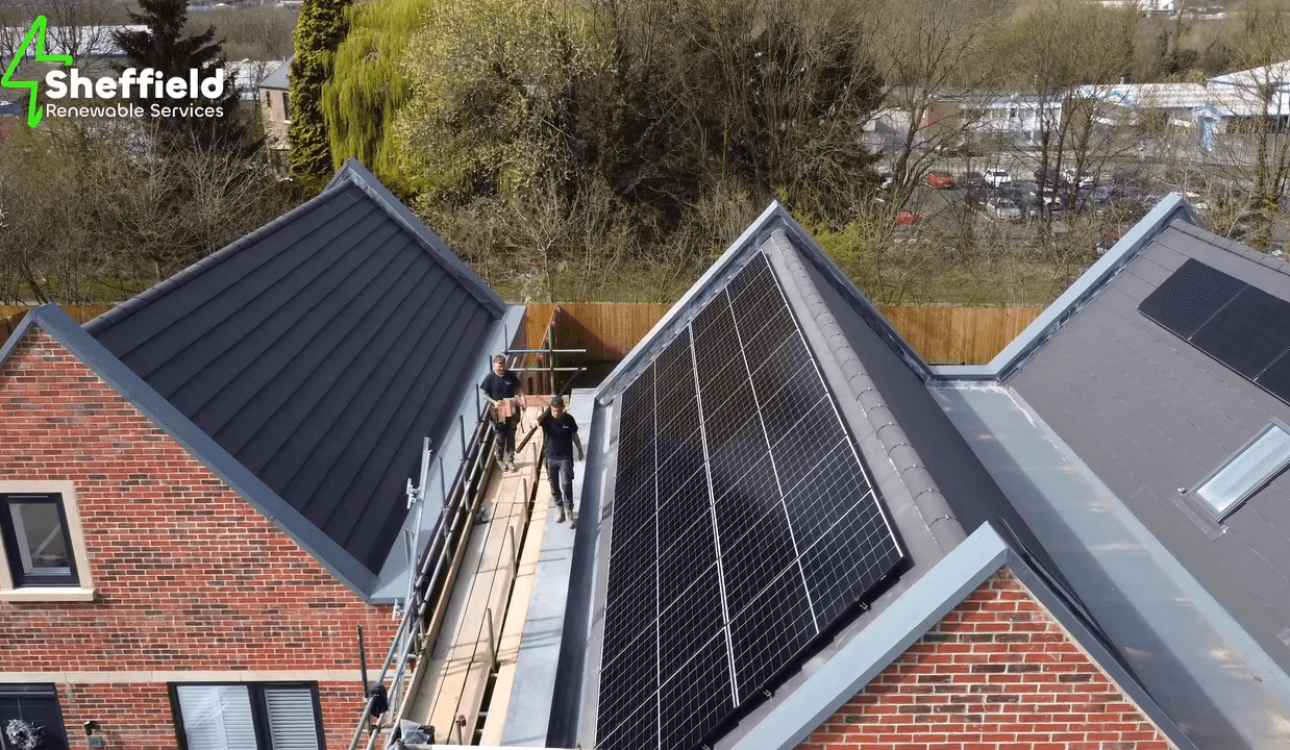

Most UK homes need a 3-4kW solar system (8-10 panels)generating 2,700-3,100kWh annually. Calculate your requirements by dividing annual electricity consumption by 900 (average kWh/kWp).
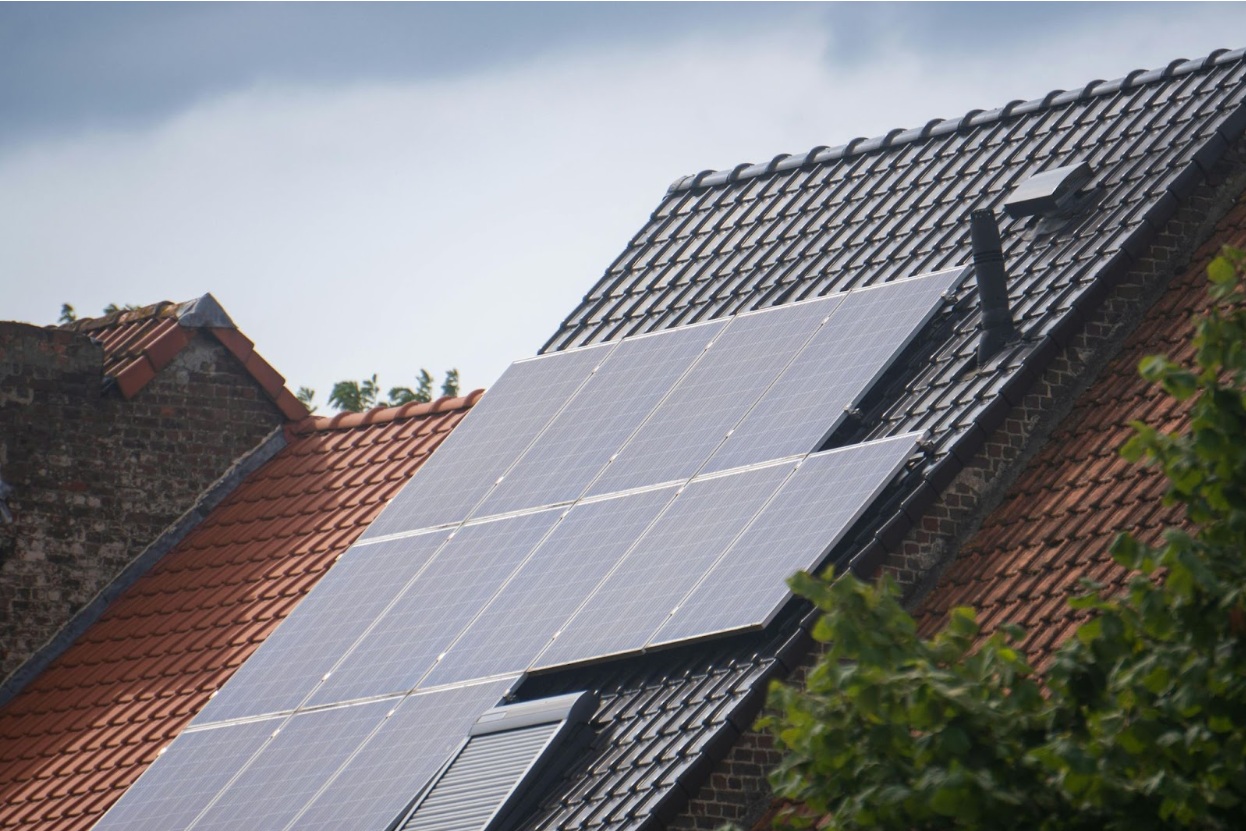
Looking to go solar in the UK? Most homes need 8-13 panels for a standard 4kW system, generating about 2,700kWh yearly. But your specific needs depend on your energy usage, roof space, and location. Let’s break down exactly what size solar system will work best for your home.
Key Takeaways
- System size is determined by your energy consumption, available roof space and location in the UK. Choosing the right size ensures you generate enough electricity without overspending.
- Typical UK homes: A 3–4 kW system usually requires 8–10 panels, covering 16–20 m² of roof space, providing a good balance between cost, generation and payback.
- Panel efficiency affects output and space: Monocrystalline panels (20–22%) produce more power per square metre, ideal for smaller roofs, while polycrystalline panels (15–17%) are more affordable but need more space.
- Costs and savings: Larger systems require higher upfront investment but deliver greater long-term savings, with most systems paying for themselves within 5–7 years.
- Future energy needs: Plan ahead for electric vehicles, heat pumps or higher electricity usage to ensure your system remains effective over time.
- Regulations and installation: Most domestic solar installations do not require planning permission, but always use MCS-certified installers for accurate sizing and safe installation.
- Seasonal performance: Solar output varies throughout the year. Summer production exceeds demand while winter is lower, so correct sizing ensures your annual energy needs are met efficiently.
Understanding Why System Size Matters
When you install a solar-PV system, its size (in kilowatt-peak, kWp) determines how much electricity you can generate each year. Choosing the right size matters because:
- A system too small may not generate enough to make a meaningful dent in your electricity bills.
- A system too large for your roof, usage or grid connection may be inefficient, more expensive upfront, and you may export more to the grid rather than use yourself (which often gives lower return).
- The “sweet spot” system size offers the best balance of cost, roof space, generation and payback.
- Roof orientation, tilt, shading, location, and future usage changes (e.g., EVs or heat-pumps) all affect actual output.
In the UK, many homes will find that a system in the 3-4 kWp range (around 8-10 modern panels) is a very good general fit. But we’ll go step-by-step so you understand how to arrive at a tailored size.
What Influences the Right Solar System Size
Several inter-linked factors will determine what system size is appropriate for your home:
Your Annual Electricity Consumption
Start by reviewing your recent electricity bills to find the total kilowatt-hours (kWh) you consumed over the past year. This is a fundamental input because the bigger your usage, the more electricity you’ll wish to generate (or save). For example, an average UK household uses somewhere around 2,700 kWh to 3,100 kWh per year.
Available Roof Space and Suitability
Your roof must have sufficient usable area, be structurally sound, and ideally have minimal shading. Many homes have complex shapes, dormers, chimneys or neighbouring trees that reduce usable area. If your roof space is limited, that may constrain your system size regardless of your consumption.
Roof Orientation, Tilt and Shading
A south-facing roof pitched at roughly 30–50° gives the best generation in the UK because it receives the most sunlight. Roofs facing east or west can still work but typically generate 10-20% less. Shading from nearby trees or buildings can cut output significantly. For example, one guide says even a roof facing due east or west will give about 20% less energy than a south‐facing one in UK conditions.
Location in the UK
Solar irradiance (the sunlight energy per unit area) varies across Britain. Southern England enjoys marginally higher yields than northern Scotland, though the difference isn’t huge if your roof is well suited. For example, estimates use figures of ~850-1,100 kWh per kWp installed per year depending on direction and local conditions.
Panel Efficiency and Wattage
Modern panels are rated typically between 350 W and 450 W each (0.35 kW to 0.45 kW). Panels with higher wattage and higher efficiency generate more electricity per square metre, which is beneficial when roof area is limited. For instance, a 400 W panel will produce more than a 300 W panel in the same space.
Future Energy Needs
If you plan to add an electric vehicle (EV), install a heat pump, or anticipate higher electricity usage in future, you may wish to oversize your solar system so that it continues to deliver value when your usage rises.
Budget and Financial Objectives
Larger systems have higher upfront costs but can bring greater savings over time. Your budget may limit your system size. But you should always weigh cost versus expected generation, self-consumption, and savings to find the most cost-effective size.
How to Calculate the Right Solar System Size for Your Home
Here is a practical method to estimate an appropriate system size for your home:
- Determine your annual electricity usage in kWh from your bills.
- Select a site‐specific yield value (i.e., how many kWh your system will generate per kWp installed per year). In UK homes, typical yields might range from ~850 to ~1,100 kWh per kWp per year depending on location, roof orientation, tilt and shading.
- Calculate:
Required system size (kWp) ≈ Annual electricity demand (kWh) ÷ site-specific yield (kWh/kWp/year)
For example: if your usage is 3,100 kWh and you estimate 900 kWh/kWp yield, then:
3,100 ÷ 900 ≈ 3.44 kWp. - Convert kWp to number of panels by dividing by individual panel rating (kW). For example, if using 400 W (0.4 kW) panels: 3.44 ÷ 0.4 ≈ 8.6 → round up to 9 panels.
- Check that you have sufficient roof area for those panels and that orientation/tilt/shading are acceptable.
| Household Type | Annual Consumption | Estimated System Size | Approx. Panels (400W Each) |
|---|---|---|---|
| Small flat / low usage (~2,000 kWh) | ~2,000 kWh | 2,000 ÷ 900 ≈ 2.2 kWp | ~6 panels |
| Average UK home (~3,100 kWh) | ~3,100 kWh | 3,100 ÷ 900 ≈ 3.4 kWp | ~9 panels |
| Larger home (~4,000 kWh) | ~4,000 kWh | 4,000 ÷ 900 ≈ 4.4 kWp | ~11 panels |
| Home with EV & heat pump (~7,000 kWh) | ~7,000 kWh | 7,000 ÷ 900 ≈ 7.8 kWp | ~20 panels |
These are rough guides only; individual results vary a lot depending on roof specifics. For more accuracy a professional installer will carry out a full survey, take shading into account, use nationally recognised calculators (e.g., the Energy Saving Trust’s solar calculator) and provide generation estimates.
How Many Solar Panels Do I Need in the UK?
Once you have determined your target system size in kWp, you can work out how many panels. The calculation is:
Panel count = System size (kWp) ÷ Individual panel rating (kW)
Modern panels rated at ~400 W to ~450 W (0.4 kW to 0.45 kW) are common. For example:
- For a ~3.4 kWp system with 400 W panels: 3.4 ÷ 0.4 ≈ 8.5 → round up to ~9 panels.
- For a ~4.4 kWp system: 4.4 ÷ 0.4 = 11 panels.
- For a ~7.8 kWp system: 7.8 ÷ 0.4 ≈ 19.5 → ~20 panels.
Because you cannot install partial panels you always round up. Also bear in mind that panel layout may be constrained by roof shape, shading, or structural features, meaning you may need a slightly higher number of panels to compensate for less than ideal placement.
| System Size | With 400W Panels | With 450W Panels |
|---|---|---|
| 2.2 kWp | 6 panels | 5 panels |
| 3.4 kWp | 9 panels | 8 panels |
| 4.4 kWp | 11 panels | 10 panels |
| 7.8 kWp | 20 panels | 18 panels |
The panel count will always be rounded up to ensure your system meets your energy needs.
Remember that actual panel output varies throughout the year. In summer months, your system will likely produce more than you need, while winter production will be lower. This is why accurate sizing based on annual consumption is crucial.
Recommended Solar System Sizes by Home Type
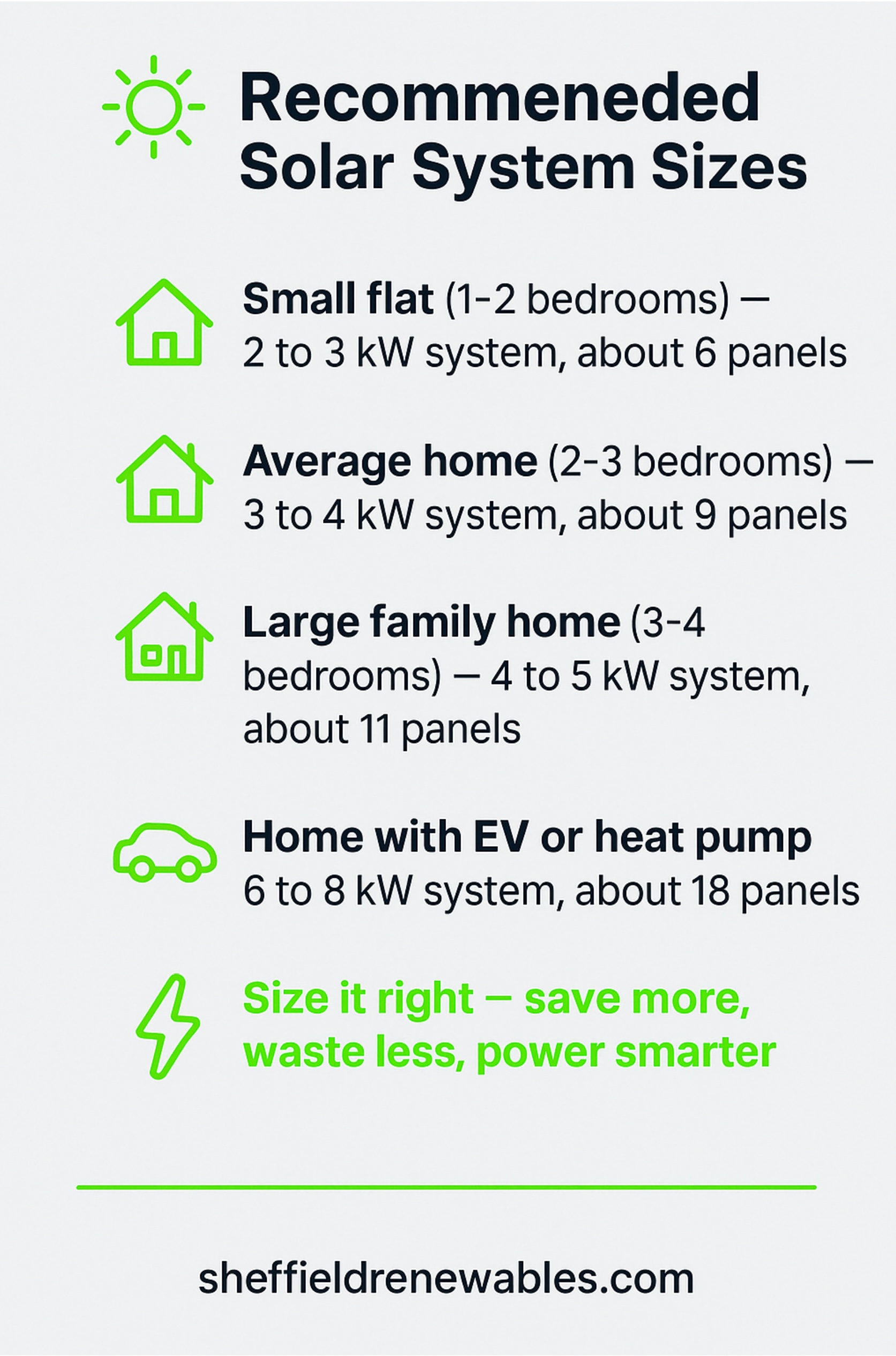
Different homes have different energy needs. Here’s what we typically recommend:
- Small flats and low-energy homes (1-2 bedrooms) usually need a 2-3kW system with 5-7 panels. These homes typically consume around 1,800-2,000kWh annually.
- Average UK homes (2-3 bedrooms) benefit most from a 3-4kW system with 8-10 panels. With consumption around 2,700-3,100kWh per year, this size system provides a good balance between cost and energy production.
- Larger family homes (3-4 bedrooms) often require a 4-5kW system with 10-13 panels to cover their higher energy needs of approximately 4,000kWh annually.
- Homes with high electricity consumption, electric vehicles, or heat pumps might need 6-8kW systems with 15-20 panels. These can generate 6,000-7,500kWh per year.
Our solar installation team can help assess your specific needs and recommend the perfect system size based on your property and energy consumption patterns.
Solar Panel Efficiency and Its Impact on System Size
Solar panel efficiency directly affects how much power you can generate from a given roof area. Higher efficiency means more electricity from the same space.
Most residential panels in the UK market offer efficiencies between 18-22%. This means they convert 18-22% of the sunlight they receive into electricity.
- Monocrystalline panels (20-22% efficient): These premium panels offer the highest power output per square meter but come at a higher cost.
- Polycrystalline panels (15-17% efficient): A more affordable option that requires slightly more roof space for the same power output.
- Thin-film panels (10-12% efficient): Rarely used for residential installations due to their lower efficiency and greater space requirements.
For most UK homes, monocrystalline panels make the most sense as they maximize generation from limited roof space. Their sleek black appearance is also preferred by many homeowners.
A 1% difference in efficiency might not seem significant, but across a 4kW system, it could mean the difference between needing 10 panels versus 11.
| System Size | Approximate Panels | Roof Area Required |
|---|---|---|
| 2kW | 5 panels | 8-10 m² |
| 3kW | 7-8 panels | 12-16 m² |
| 4kW | 10 panels | 16-20 m² |
| 5kW | 12-13 panels | 20-26 m² |
| 6kW+ | 15+ panels | 30+ m² |
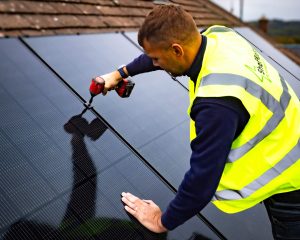
Complex roof shapes or multiple roof sections may require creative panel arrangements. Our surveyors will measure your available roof space during a site visit and design a system that maximizes generation within your constraints.

Cost and Savings for Each System Size in the UK
The initial investment for solar panels varies based on system size, panel quality, and installation complexity. Here’s what you can expect to pay:
| System Size | Typical Cost Range | Annual Savings | Payback Period |
|---|---|---|---|
| 2kW | £3,500-£5,000 | £500-£700 | 6-8 years |
| 3kW | £4,500-£6,500 | £750-£950 | 5-7 years |
| 4kW | £5,500-£8,000 | £950-£1,200 | 5-7 years |
| 5kW | £7,000-£9,500 | £1,200-£1,500 | 5-7 years |
| 6kW+ | £8,500+ | £1,500+ | 5-8 years |
These figures assume:
- Current electricity rates around 30p per kWh
- Smart Export Guarantee payments of 7-15p per kWh
- Self-consumption of 50% of generated electricity
Adding battery storage increases initial costs by £2,500-£8,000 but can boost self-consumption to 70-85%, improving overall returns.
Why the “3-4 kWp” System Is So Popular
For many UK homes, a system around 3-4 kWp hits a “sweet-spot” between amount of energy generated, cost of installation, typical roof size, typical usage and manageable payback period. The typical roof size allows ~8-10 modern panels for that capacity. Many households find this offers a strong return with moderate upfront cost.
UK Regulations, Grid and Planning Considerations
Solar installations must comply with regulations and grid connection rules.
Grid Connection and Export Limits
Most homes in the UK have a single-phase supply. Systems up to 3.68 kW per phase (16 A) usually do not require special permission from the Distribution Network Operator (DNO). Larger systems, such as 6 kWp or more, may require DNO approval or an export-limiting solution to remain within allowable export capacity.
Some installers use export-limiters or smart inverters, allowing larger systems while keeping export levels within the permitted range.
Planning Permission
In England, Scotland, and Wales, most domestic roof-mounted solar installations are considered permitted development and do not require planning permission if they:
- Do not extend more than 20 cm above the roof surface
- Are not higher than the highest part of the roof
- Are not installed on listed buildings
- Comply with additional rules in conservation areas
It is important to check local planning rules, especially for listed properties or those in conservation areas.
Certification and Installer Standards
Ensure your installer is certified under the Microgeneration Certification Scheme (MCS) and provides a detailed generation estimate using recognised methodology (e.g., MIS 3002). This takes into account roof orientation, tilt, and shading, ensuring your system is correctly sized and annual generation estimates are realistic.
Get Your Free Solar System Quote
Ready to find out exactly what size solar system your home needs? Contact us today for a free, no-obligation solar survey. Our MCS-certified team will analyze your energy usage, inspect your roof, and provide a detailed proposal tailored to your specific needs and budget. We’ll help you navigate the technical details and find the perfect solar solution for your home.
FAQs
How do I know if my roof is suitable for solar panels?
A south-facing roof with a pitch of around 30–50° and minimal shading is ideal, but east or west-facing roofs also work well. The installer will assess your roof’s structural integrity, orientation, shading and potential generation during a free survey.
Can I install a larger system than I currently need?
Yes, if you have space and budget. A larger system can future-proof against increasing electricity usage from electric vehicles or heat pumps and might improve your home value. Just ensure you understand export limits, grid connection requirements and the cost versus return.
Will adding battery storage change how many panels I need?
No. Battery storage does not change the number of panels required, as sizing for generation is independent. However, it significantly affects how much of the electricity you generate is used in your home (self-consumption). This means more of your generated power stays in your home rather than being exported to the grid, improving savings and returns, but it does not reduce the number of panels needed.
Do I need planning permission for solar panels?
For most domestic solar installations in England, Scotland and Wales, planning permission is not required if the installation meets permitted development criteria. This includes panels not protruding more than 20 cm, not being higher than the highest part of the roof, and not being on a listed building. If your property is in a protected area, conservation zone, or is listed, check with your local planning authority.
How does system size affect maintenance requirements?
Larger systems involve more panels, wiring and potentially more complex set-ups, but the maintenance is broadly similar: annual visual inspection, checking the inverter, and cleaning as required. Costs may scale somewhat with size, but the main factors affecting performance are cleanliness, shading, correct mounting and monitoring, rather than system size itself.
What happens if my energy needs increase after installation?
If you add electric vehicles or heat pumps, your system may still generate useful electricity, but consumption could outpace generation. You can:
- Use more of the generated electricity by shifting usage to midday when solar is producing.
- Add battery storage to capture excess generation for later use.
- Install additional panels if roof space and grid connection allow.
When designing your original system, it is wise to consider future growth to avoid undersizing.