
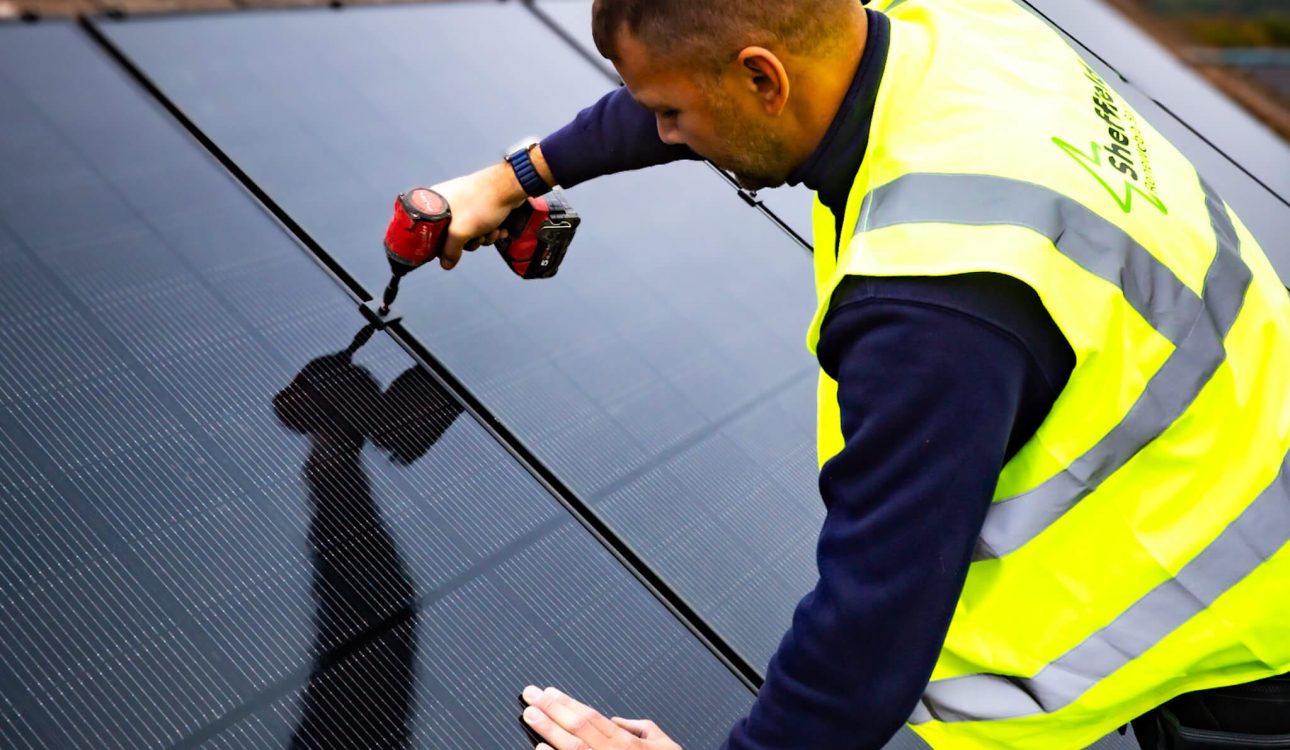

Quick Answer: Solar panel installation in the UK takes 1-3 days for residential systems, involving roof mounting, electrical connection, and grid integration by MCS-certified installers following building regulations.

Solar panel installation in the UK is a structured, regulated process when done properly. With 1.8 million installations already generating clean electricity across the country, it’s become a proven solution for cutting energy bills and reducing grid dependence whilst contributing to Net Zero targets.
Key Takeaways
- Domestic rooftop solar falls under Permitted Development Rights, meaning installations proceed without planning approval unless you’re in listed buildings or conservation areas.
- The physical installation is quick, but surveying, design, permissions, and grid registration extend the total timeline to several weeks from first contact to system activation.
- Using MCS-certified installers ensures your system meets UK standards, qualifies for Smart Export Guarantee payments, and complies with building regulations for safety and insurance.
How Solar Panel Installation Works in the UK
Solar panels generate electricity by converting daylight into direct current (DC) power.
An inverter then converts that DC into alternating current (AC) that powers your home and feeds excess back to the grid.
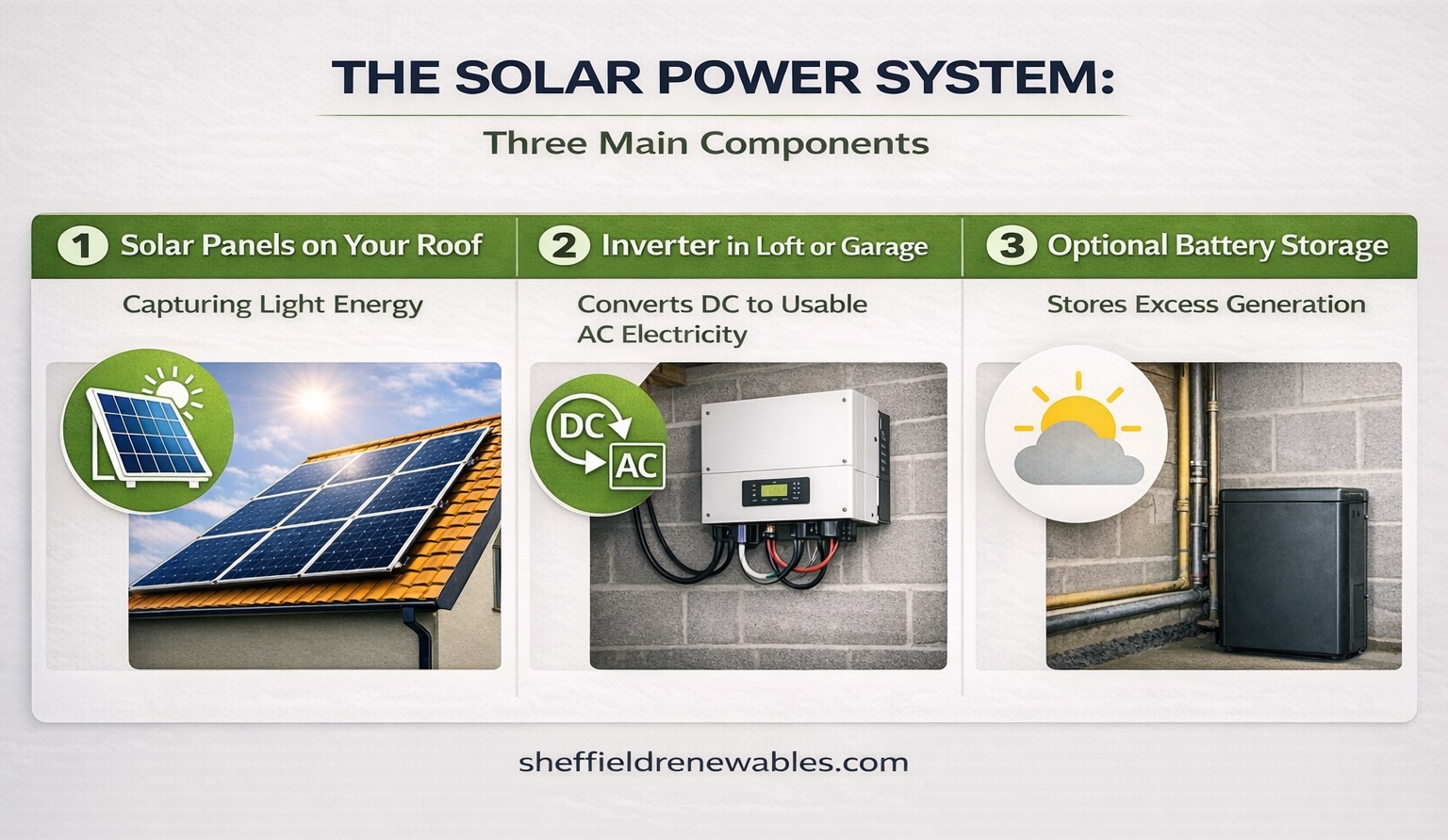
The system has three main components:
- Solar panels sit on your roof capturing light energy.
- The inverter (usually mounted in your loft or garage) converts DC to usable AC electricity.
- An optional battery stores excess generation for use when the sun isn’t shining, though most UK systems operate without storage initially.
Grid-connected systems are standard in the UK. When your panels generate more electricity than you’re using, the surplus flows back to the grid. You get paid for this export through the Smart Export Guarantee (SEG), which requires suppliers to pay you for every kilowatt-hour you send back.
The UK currently has about 18.9 GW of solar capacity across roughly 1.8 million installations, with residential rooftop systems making up approximately 1.55 million of those.
Is Your Home Suitable for Solar Panels?
Before you rule solar out, it’s worth knowing that most UK homes are far better suited to solar panels than their owners expect.
So, the first and foremost factor is your roof’s orientation and pitch.
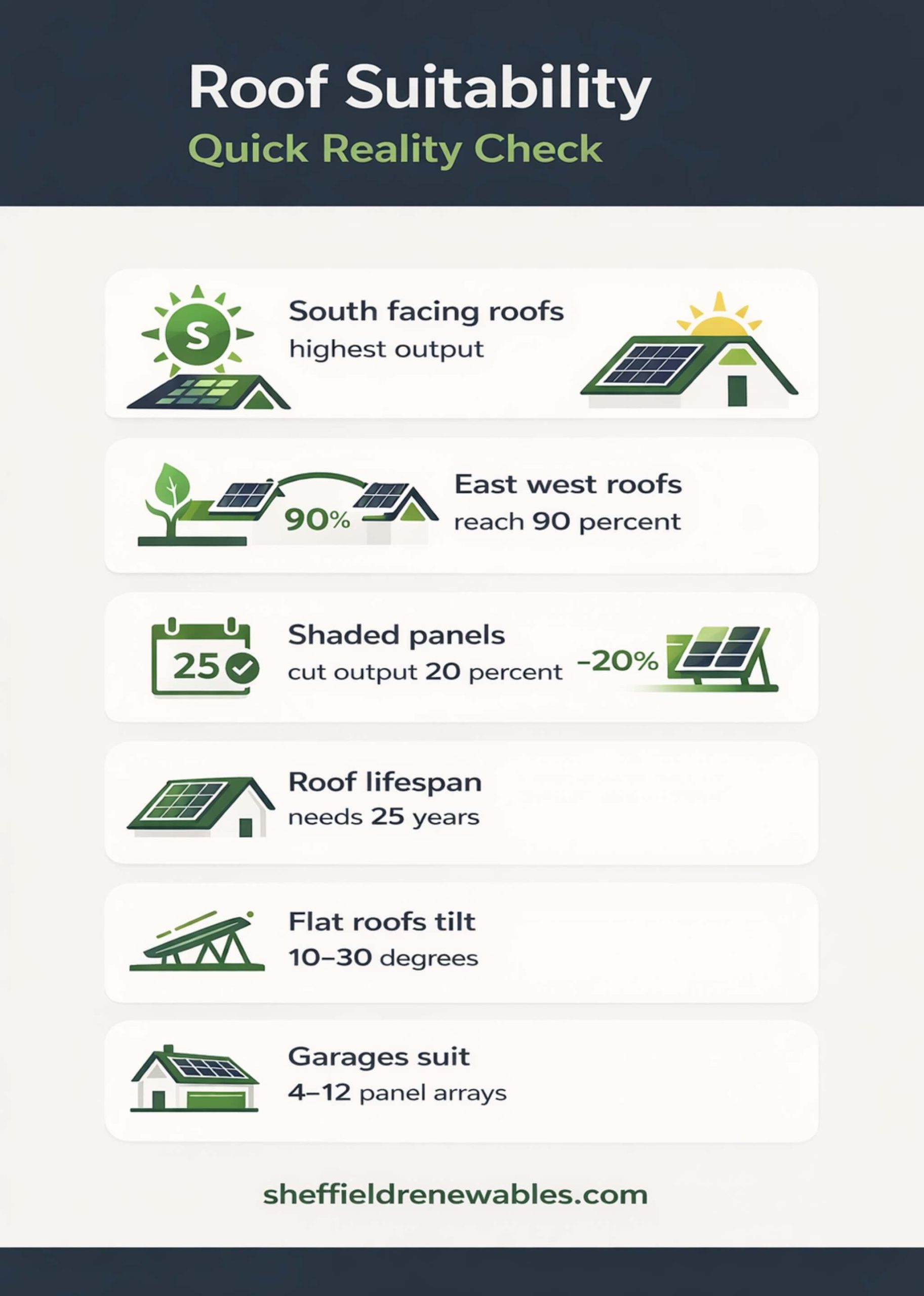
Roof orientation and pitch affect output significantly. South-facing roofs generate maximum electricity, but southeast and southwest orientations still deliver excellent results (roughly 90-95% of south-facing output).
Even with a well-positioned roof, sunlight still needs a clear path to your panels. And that’s where shading becomes the next crucial consideration.
Trees, chimneys, neighbouring buildings, or other obstructions that shade panels during peak sun hours reduce generation substantially. Shade on even one panel can reduce the power you generate overall.
Beyond performance, it’s also important to check whether your roof is in the right condition for installation. Solar panels add weight, so your roof needs to be sound enough to take it. If the roof is ageing or already in poor shape, repairs or replacement usually come first to avoid problems later.
This is exactly the sort of thing installers look at every day, checking roof direction, shading and structure before giving you any firm answers.
Once that’s been done, you’re not guessing anymore; you’ve got a clear picture of whether solar will genuinely work for your home.
Can Solar Panels Be Installed on Flat Roofs, Garages or Outbuildings?
Yes, flat roofs work brilliantly with appropriate mounting systems.
Installers use ballasted frames or tilt brackets that elevate panels to optimal angles (typically 10-30 degrees) without penetrating the roof membrane. The ballast weight holds everything securely whilst maintaining weatherproofing.
Garages and outbuildings are excellent candidates, particularly if your main roof faces the wrong direction or suffers from shading.
As long as the structure is sound and gets decent sun, installation and wiring are usually straightforward.
Solar Panel Installation Step-by-Step Guide
Getting solar panels installed can sound like a big job, especially if you’ve never been through it before. In reality, it’s a lot more straightforward than most people think. Once you know the steps, the whole process feels far less daunting.
Below, we’ll guide you through each stage of the installation, from the initial survey through to the final switch-on.
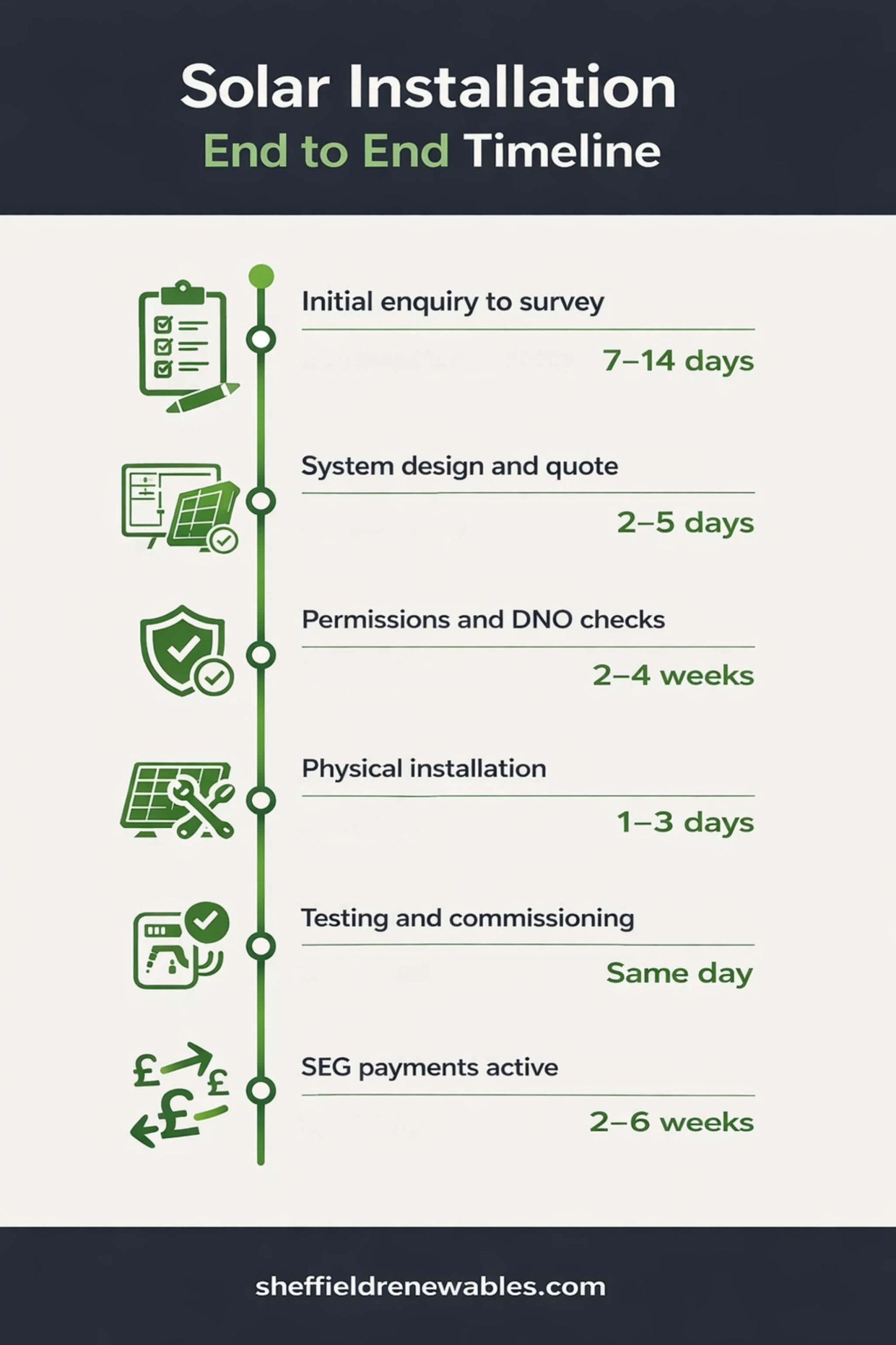
1. Initial Survey and Design
It all starts with a proper look at your home. The installer visits to assess your roof condition and angle, your electrics, any shading around the property and where key equipment like the inverter or battery would be placed. They also look at how you use electricity throughout the day.
From that, they design a system that fits your home and how you actually use electricity, rather than a one-size-fits-all setup.
2. Permissions and Compliance
In many cases, planning permission is not required, but the work still needs to meet official UK standards and building regulations. This applies to things like solar panel installations, where these rules exist to protect your home, your safety and your investment.
Making sure everything is done properly also means you stay insured and avoid issues later on.
Your installer takes care of building control, grid notifications and safety checks for you, so you are not left sorting paperwork or trying to figure out what rules apply to your home.
3. Pre-Installation Prep
Before anything goes on the roof, a few practical checks are handled in the background.
Scaffolding (a temporary structure put up around your home so installers can work safely at height) is arranged if required, delivery dates are confirmed, and final checks, such as confirming measurements, roof condition and electrical connections, are made to ensure your roof and electrics are ready.
You are kept informed about when the work will start and how long the installation is expected to take, so there are no surprises on the day.
4. Installation Day
On the day of installation, the team arrives as planned and gets straight to work fitting the panels, wiring and inverter.
They work efficiently and keep disruption to a minimum. Power is only switched off briefly, if at all, and in most cases, the installation is completed within a day
5. Testing and Commissioning
Once fitted, everything is tested to make sure it is working properly and safely. You will be shown how the system works, how to read the monitoring app, and when you can start using the power you generate.
6. Post Installation Admin
Afterwards, the installer registers your system, sorts certificates, and helps with export payments if you want them. You are left with a working system, the paperwork in order, and a clear idea of what happens next.
It all sounds like quite a bit at first, but once it’s done and signed off following the government guidance, you can just sit back and enjoy the benefits.
After Installation: Grid Connection, Paperwork and Future Changes
Installation completion isn’t quite the end of the process. Several administrative steps ensure everything functions properly long-term.
- To begin with, the grid side of things is handled for you. Your installer sorts the DNO notification and grid registration, making sure your system is approved to export power without you needing to chase paperwork.
- After that, attention turns to the Smart Export Guarantee. Using the certificates your installer provides, you can register with an SEG supplier and start getting paid for any spare electricity you send back to the grid.
- Alongside this, you will receive system warranties and key documents covering the panels, inverter and installation work. These are worth keeping safe for insurance, future maintenance, or if you ever sell the property.
- Finally, you are set up with monitoring apps and clear maintenance expectations. You can track generation and usage easily, with only light upkeep needed over the system’s lifetime.
Once all that’s in place, there’s very little left for you to worry about. The system quietly gets on with the job, and you can just enjoy watching your electricity bills come down over time.
Can I Add Battery Storage Later After Installing Solar Panels?
Yes, retrofitting batteries to existing solar installations is straightforward with modern systems. The battery connects to your existing inverter (if it’s battery-compatible) or requires adding a battery-specific inverter alongside your solar inverter. Electrical work is minimal compared to the original installation.
Whether it makes financial sense depends on your usage patterns and electricity tariffs.
Many homeowners install solar first, see how their usage patterns align with generation, then add batteries later if benefits justify costs. This staged approach spreads investment whilst still capturing immediate solar savings.
Not Sure If Solar Is Worth It? Thinking about installing solar panels but not sure if they make financial sense for your home? Read our full guide on costs, savings and whether solar panels are worth it.
Conclusion
Solar panel installation in the UK is now a well-worn path. The tech is proven, the rules are clear, and millions of homes already use it.
Typical payback periods of 8-12 years deliver 13+ years of effectively free electricity from systems lasting 25+ years. Fitting usually takes a day or two, with the rest handled for you. With long system lifespans, sensible payback times, zero VAT for now, and export payments, solar has become a straightforward, practical choice.
Get your free quote today, and we’ll assess your property’s specific suitability, explain what installation involves for your roof, and show you exactly what savings and returns to expect.
FAQs
Can I install solar panels myself, or do I need a professional installer?
You can install them yourself, but most people do not. DIY means no MCS certification, no export payments, and possible insurance issues. A professional installer keeps everything compliant and covered.
Will installing solar panels disrupt my home or power supply?
Disruption is minimal. Most work happens outside, with a short power cut when connecting the system. Installers usually warn you in advance and plan it at a convenient time.
Do solar panels need to be connected to the electricity grid?
They do not have to be, but staying grid-connected makes far more sense. It avoids expensive batteries and lets you export spare electricity while keeping the supply reliable
What should I check before signing a solar panel installation quote?
Check that the installer is MCS certified, the equipment is clearly listed, warranties are included, and the figures for savings and output are realistic for your home.
What happens if I move house after installing solar panels?
The system stays with the property. Warranties and paperwork transfer to the new owner, and solar often makes homes more appealing thanks to lower running costs.