
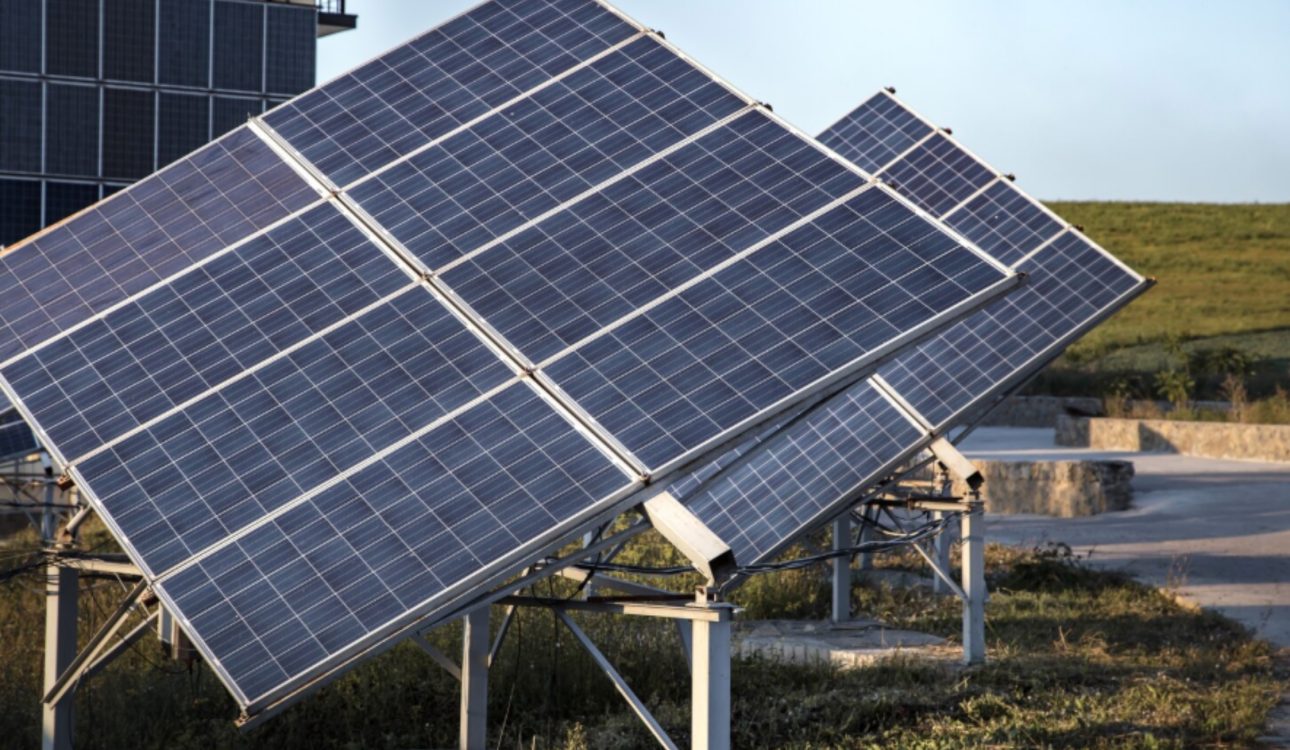

Three main solar panel types are used in real installations: monocrystalline (highest efficiency, best for limited roof space), polycrystalline (budget option), and thin-film (specialised commercial use).
Three main types of solar panels dominate real installations, and while technical variants exist, residential properties typically choose one primary type.
Monocrystalline panels lead for homes because of superior efficiency and space savings. This article helps homeowners compare real options, explains differences simply, and guides you toward the best panel for your property without technical jargon getting in the way.
Key Takeaways
- Monocrystalline panels dominate UK homes. They offer 20-23% efficiency, maximise output on limited roof space, and now provide the best long-term value as prices have fallen.
- Polycrystalline is declining in popularity. The efficiency gap (15-18%) and narrowing price difference mean monocrystalline usually justifies the slightly higher cost for residential installations.
- Thin-film rarely suits standard homes. At 10-13% efficiency, thin-film requires much larger roof areas and is mainly used for commercial buildings or specialised applications.
Why Different Types of Solar Panels Exist
Solar panels differ because every property balances cost, roof space, and output differently.
Higher-efficiency panels generate more electricity from smaller areas, which suits compact roofs or homes with limited usable space. Lower-cost panels need more surface area but can deliver strong value where roof size is not restricted.
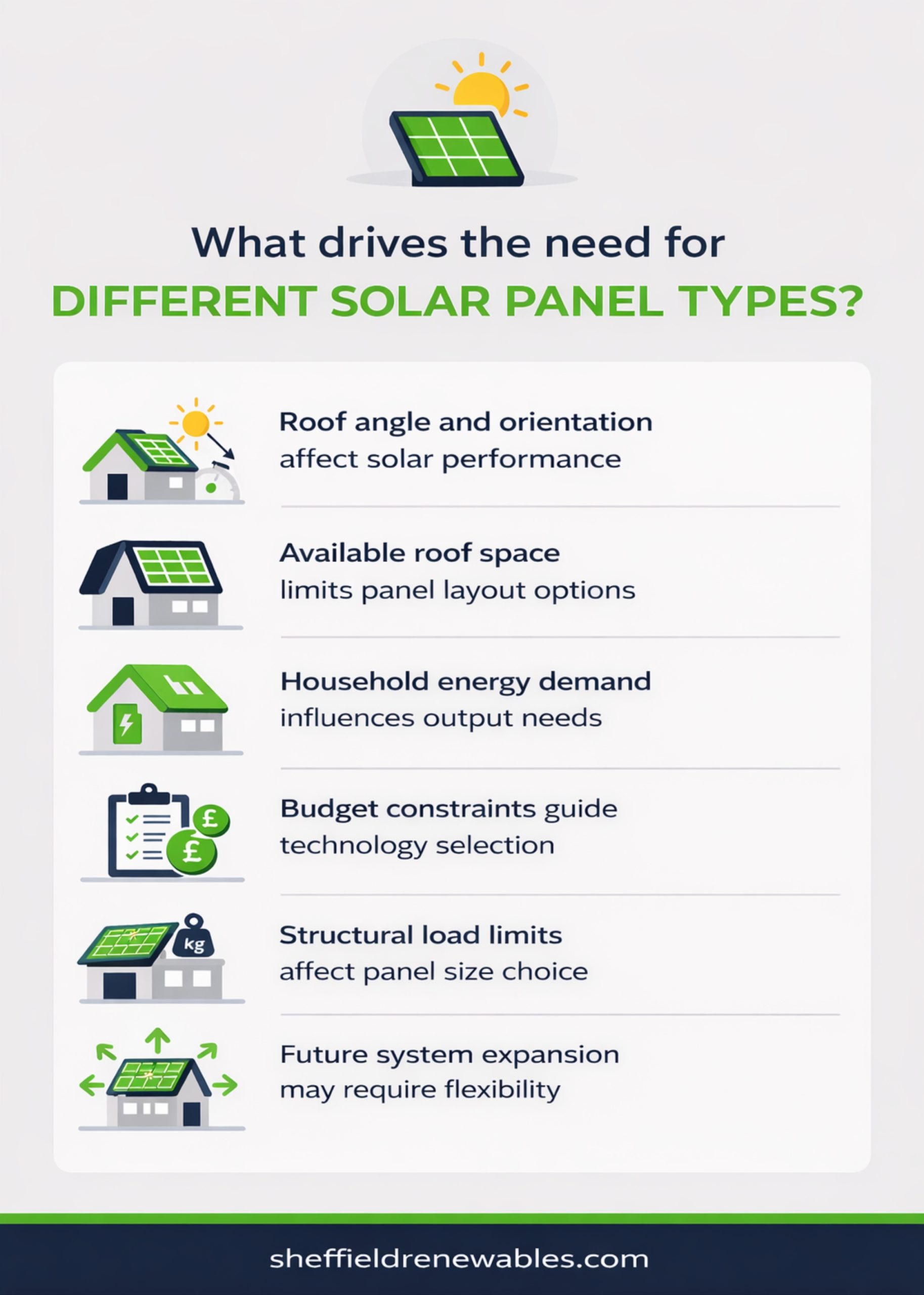
Larger residential roofs or commercial buildings often prioritise upfront budget and total system size, while smaller homes focus on maximising generation per square metre. Panel choice, therefore, reflects practical installation needs rather than purely technical preferences.
Solar panel technologies and market adoption data show UK installed capacity now exceeds 15.7 GW, with crystalline silicon modules making up the majority, as they suit typical residential roof sizes and performance needs.
How Solar Panels Are Categorised
Confusion often comes from mixing up panel types, design features, and manufacturing technologies. Homeowners mainly choose between three panel types, but then face additional decisions about features within those types. The layers below help cut through marketing noise.
Panel Types Homeowners Choose Between
The real purchasing choices break down into three categories.
- Monocrystalline panels use a single continuous silicon crystal and deliver the highest efficiency.
- Polycrystalline panels are manufactured using multiple silicon crystals melted together, offering good reliability at historically lower cost.
- Thin-film panels use semiconductor layers deposited onto various backing materials, providing flexibility and lightweight construction.
These are the fundamental types that determine performance characteristics and suitability for different applications.
Design Variants and Cell Technologies
These options belong within the main panel types and affect performance or appearance rather than defining a separate category.
- All-black panels prioritise aesthetics by using black backsheets and frames rather than the standard silver.
- Half-cut cells improve efficiency by reducing resistive losses within each cell.
- Bifacial panels capture light from both front and rear surfaces, boosting output when reflective surfaces are beneath the array.
How solar panels are classified shows the technical performance modelling used in UK installations. These features exist within a panel type rather than representing separate types themselves, which is an important distinction when comparing quotes and specifications.
The Three Main Types of Solar Panels Used in Real Installations
Solar installations in the UK mainly rely on a small group of proven panel technologies rather than dozens of different options.
In real projects, the choice usually comes down to three established panel types, each balancing efficiency, cost, and roof space differently.
Monocrystalline Solar Panels
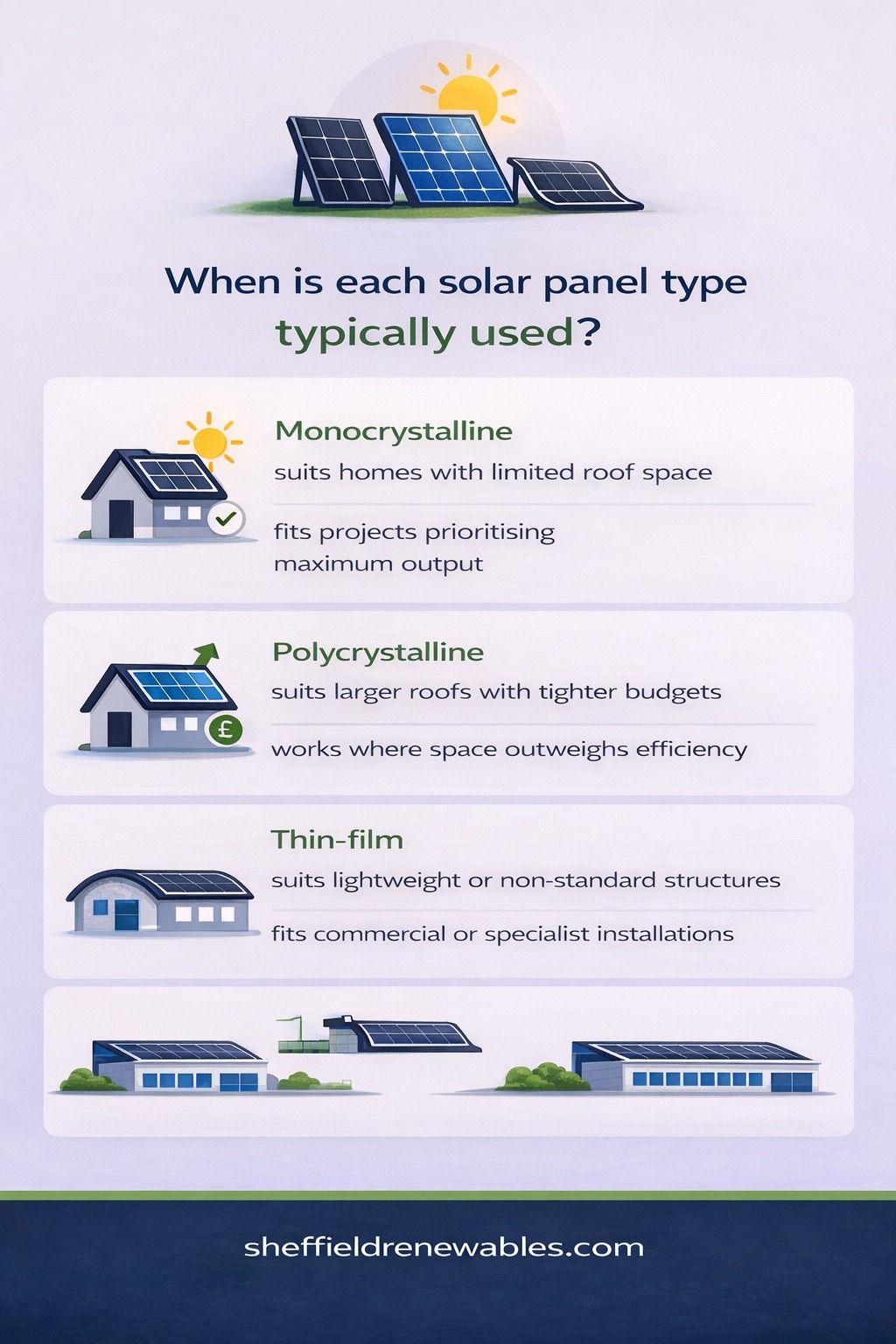
Monocrystalline panels are made from a single continuous silicon crystal, which gives them a uniform black appearance and the highest efficiency among mainstream residential options.
Typical efficiency now ranges around 20 to 23 percent for commercially available products. This superior efficiency means stronger performance per square metre, which matters enormously on smaller roofs where space limits how many panels fit.
Low light performance also tends to be better, which suits UK conditions where cloud cover and winter daylight are limited.
Lifespan and warranties often reach 25 to 30 years or beyond, with modern modules degrading at roughly 0.3 to 0.5 percent per year.
Monocrystalline panels dominate new residential installations because roof space constraints make maximising output per panel the priority. If you are unsure whether mono panels suit your roof, we can assess your home with our residential solar panel installation services.
Polycrystalline Solar Panels
Polycrystalline panels are manufactured using multiple silicon crystals melted together, giving them a blue speckled appearance. Efficiency typically falls around 15 to 18 percent, which is lower than monocrystalline but still acceptable for many applications.
Manufacturing costs have historically been lower, which made poly panels the budget option for years. The trade-off comes in space requirements, because achieving the same output needs more roof area compared to mono panels. Poly panels remain suitable for larger roofs where space is not constrained and budget takes priority.
Performance in limited sunlight falls slightly behind monocrystalline, which matters in UK winters when irradiance drops sharply. Market trends show polycrystalline declining in popularity as monocrystalline prices have fallen and efficiency improved, with mono now dominating new installations across residential and commercial projects.
Thin-Film Solar Panels
Thin-film technology works by depositing semiconductor layers (such as cadmium telluride or amorphous silicon) onto glass, metal, or plastic backing. Efficiency typically measures around 10 to 13 percent for widely available modules.
The main advantages come from being lightweight and flexible, which suits applications where structural loading limits panel weight or where curved surfaces need covering. Solar panel efficiency data from global research shows thin-film performance improving but still trailing crystalline silicon. Thin-film performs better in high temperatures and diffuse light, but UK installations rarely see temperatures high enough for this to matter.
Commercial roofs, large structures, and building-integrated photovoltaic projects use thin-film more often than homes. Standard residential roofs rarely specify thin-film because the lower efficiency requires much larger installation area, which cannot be accommodated on typical homes.
Comparison of Solar Panel Types for Homes
This is how the three main panel types compare across key factors that matter for residential installations:
| Panel Type | Efficiency | Space Required | Lifespan | Relative Cost | Typical Use Case |
|---|---|---|---|---|---|
| Monocrystalline | 20–23% | Low (best output per m²) | 25–30+ years | Higher upfront, best long-term value | Limited roof space, long-term ROI priority |
| Polycrystalline | 15–18% | Moderate (needs more area) | 20–25 years | Lower historically, narrowing gap | Larger roofs, budget-focused installs |
| Thin-film | 10–13% | High (much larger area needed) | 15–25 years depending on material | Variable, often lower per watt | Commercial roofs, lightweight structures, BIPV |
Monocrystalline delivers the best overall performance for residential properties because of superior efficiency and space savings.
Polycrystalline remains acceptable for space-rich properties where budget takes priority over maximising output per square metre. Thin-film exists as a specialised option rarely used on standard homes. Real solar installation trends show how residential systems now prioritise efficiency to maximise Smart Export Guarantee payments, which favours monocrystalline adoption.
Which Solar Panel Type Is Best for Your Home
Monocrystalline panels are often recommended today because prices have dropped while efficiency improved, making them the best value for typical residential roofs.
Final choice depends on roof size and orientation, shading levels, budget constraints, and long-term savings priorities.
System design quality and installer expertise matter just as much as panel type, because poor installation undermines even the best panels.
Panel type alone does not determine performance when other factors, like inverter quality, shading mitigation, and maintenance, also play crucial roles.
Conclusion
Three solar panel types dominate installations. Monocrystalline suits space-limited UK roofs needing higher efficiency. Polycrystalline fits larger, budget-focused properties. Thin-film serves niche specialist uses. Professional assessment ensures the right choice for roof size, performance targets, and long-term value overall.
Ready to see which solar panel type fits your home best? Contact us today for a free solar assessment and quote.
FAQs
What are the three main types of solar panels?
Monocrystalline (highest efficiency), polycrystalline (moderate efficiency, historically cheaper), and thin-film (flexible, lightweight, lower efficiency). Crystalline silicon dominates UK residential installations.
Which type of solar panel is best for residential homes?
Monocrystalline suits residential properties because of superior efficiency, strong low light performance, and space savings on typical UK roofs.
Are polycrystalline panels still worth buying?
Only when roof space is abundant and budget takes absolute priority. Monocrystalline prices have dropped enough that the efficiency gain usually justifies slightly higher cost.
Do thin-film solar panels last as long as crystalline panels?
Lifespan varies by thin-film material, ranging 15 to 25 years. Crystalline panels typically offer 25 to 30 years with better long term warranties.
Does panel type affect how much electricity my system produces?
Yes, significantly. Higher efficiency panels produce more electricity per square metre, which matters enormously when roof space limits total panel count.