


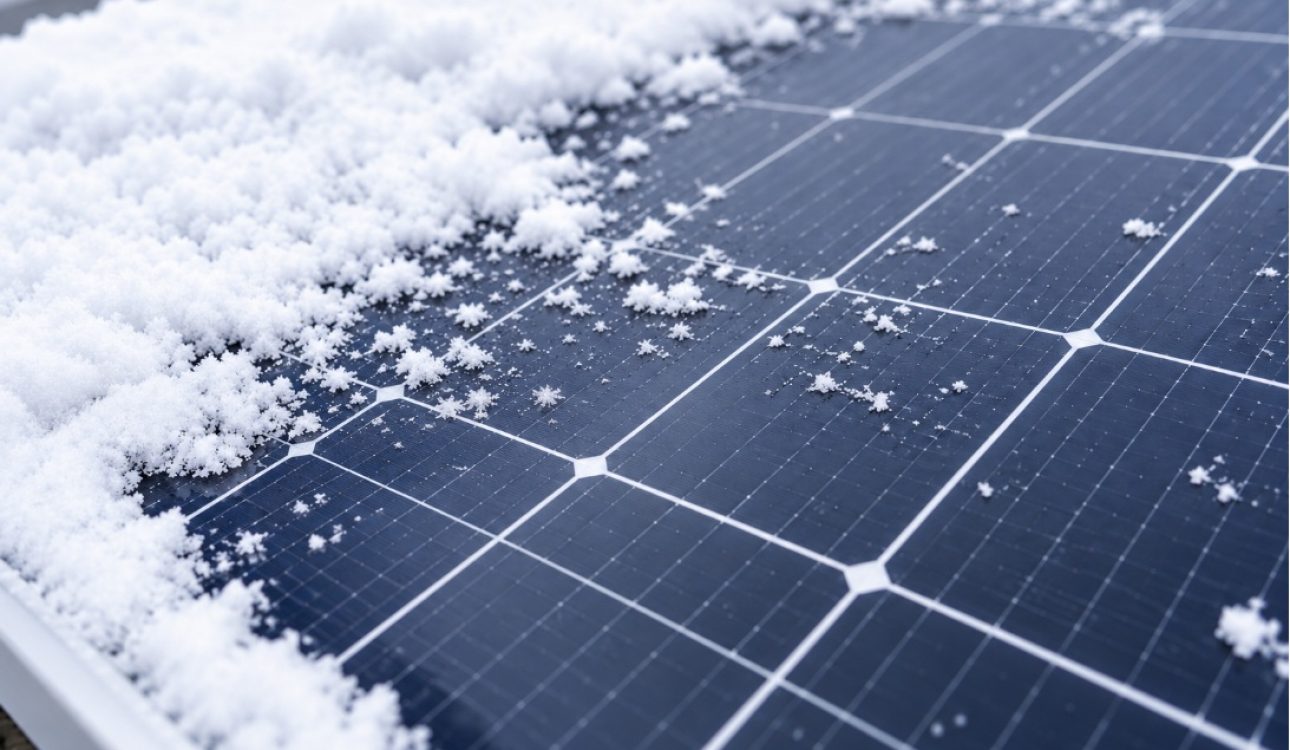

Quick Answer: Solar panels still generate electricity in winter, but shorter days, lower sun angles and cloud reduce output. Cold temperatures can help efficiency, while annual generation matters more than December output.
Solar panels in winter still generate electricity, but their output is usually much lower than in summer. The main reasons are shorter days, a lower sun and more cloud, which reduce the sunlight reaching the panels. Cold temperatures alone do not stop generation. For homeowners, the key question is how winter production fits into the system’s annual output and the household’s electricity use.
Key Takeaways
- Solar panels continue generating electricity in winter, although shorter days and lower sunlight reduce their output.
- Cold temperatures can improve panel efficiency, but this rarely offsets the reduction in available winter sunlight.
- A battery stores surplus electricity for later use, but cannot make up for consistently low winter generation.
- Annual generation and how well it matches household electricity use matter more than winter output alone.
Do Solar Panels Work in Winter?
Yes, solar panels continue generating electricity throughout winter. They use daylight rather than heat, so cold weather does not switch them off.
However, shorter days mean fewer hours of generation. The sun also sits lower in the sky, while overcast conditions reduce the sunlight reaching the panels. These factors usually make winter output much lower than summer output.
Panels can still contribute to household electricity use during daylight hours. The amount depends on the weather, roof orientation, shading and size of the system.
Why Solar Generation Often Peaks When Household Demand Is Highest?
A UK heatwave can create a useful overlap between solar generation and household electricity demand. Sustained sunny weather gives panels plenty of daylight to generate electricity, while cooling demand often rises during the warmest part of the day.
The Met Office definition of a UK heatwave requires at least three consecutive days of temperatures reaching the relevant local threshold. Those sustained conditions can provide several days of useful solar generation.
This timing matters because using solar electricity as it is generated allows you to avoid buying the same electricity from the grid.
Once the sun goes down, however, solar generation falls away. Evening cooling therefore needs grid electricity unless you have stored some of your daytime generation.
How Much Do Solar Panels Generate in Winter?
Solar panels generate less electricity in winter because they receive fewer hours of sunlight each day. The difference becomes clear when winter months are compared with late spring and summer.
According to the Met Office’s UK climate averages for 1991–2020, the UK averages just 42.68 hours of sunshine in December, compared with 192.15 hours in May. This seasonal drop helps explain why solar output falls during winter, as the figures below show:
| Month | UK Average Sunshine Hours (1991–2020) |
|---|---|
| December | 42.68 |
| January | 47.45 |
| February | 71.86 |
| May | 192.15 |
| June | 171.49 |
| July | 173.44 |
December receives only around 22% of May’s average sunshine hours. That is why solar output generally drops sharply in winter.
These figures describe sunshine hours, not the electricity a specific system will generate. Actual output depends on the panel capacity, roof orientation, shading and local weather. A property-specific estimate should account for these factors rather than applying a single winter generation figure to every home.
How Your Roof Affects Winter Generation
Winter solar output depends on:
- Roof direction
- Roof pitch
- Available daylight
- Nearby trees
- Shadows from buildings or chimneys
Shading can reduce the sunlight reaching panels, even on otherwise bright winter days.
These factors become more significant in winter because the sun stays lower in the sky. A roof that receives plenty of direct sunlight in summer may experience longer periods of shading during the colder months. The usable roof area and panel arrangement also influence how much electricity the system can generate.
That is why roof conditions form part of the installation design process. The MCS Solar PV Installation Standard (MIS 3002:2025) requires MCS-certified installations to assess factors such as panel orientation, tilt and shading before the system is installed.
If you are considering a new system, our solar panel installation service can help assess the roof and suitable panel layout.
Do Solar Panels Work on Cloudy and Rainy Days?
Yes, solar panels can still generate electricity on cloudy and rainy days because daylight reaches the panels even when the sun is hidden. However, thick clouds reduce the amount of light available, so generation can fall during prolonged periods of overcast weather.
Rain itself does not stop a solar panel from producing electricity. The main issue is the reduced sunlight that often comes with wet weather. Other conditions can also affect performance, including humidity and snow.
Research from the University of Brighton examined how weather conditions affected real solar installations in south-east England. The study on weather and PV efficiency identified humidity, rain and snow among the factors with the strongest effects in its analysis.
The findings reflect the installations and conditions studied, so the results may differ for other systems and locations across the UK.
Does Cold Weather Affect Solar Panel Efficiency?
Cold weather does not automatically reduce solar panel efficiency. Crystalline silicon cells generally operate more efficiently at lower temperatures because their electrical output falls as they heat above the standard test temperature of 25°C.
This means a cold, clear day can provide favourable operating conditions for the panels. The bigger winter limitation is the reduced sunlight available, which usually outweighs the efficiency benefit from lower temperatures.

Research from Loughborough University’s Centre for Renewable Energy Systems Technology examined panel performance in the UK’s temperate maritime climate. Its research on PV performance in a temperate maritime climate considers temperature alongside irradiance and other conditions affecting real-world output.
In practice, the amount of light reaching the panels usually matters more to winter generation than the cold itself.
Why Annual Generation Matters More Than Winter Output
December output alone does not show whether a solar system is worthwhile. Panels produce electricity throughout the year, with generation generally stronger during spring and summer. The more useful measure is expected annual generation and how well it matches household demand.
The Department for Energy Security and Net Zero reported that UK solar generation reached 8.4 TWh in Q2 2026, matching the previous record despite fewer sunshine hours than Q2 2025. The increase in installed capacity helped offset the difference.
This illustrates why weather and installed capacity both matter. Solar output changes with the seasons, but looking at a full year’s production gives a clearer picture of what a system can contribute to the home.
Will Solar Panels Still Reduce My Electricity Bills in Winter?
Yes, solar panels can still reduce electricity bills in winter, although savings are usually smaller because shorter days and weaker sunlight mean less electricity is generated. Using appliances during daylight hours helps households consume more of their own solar electricity, reducing how much they buy from the grid.
Winter electricity demand can also rise as lights stay on longer and electric heating may be used more frequently. Households may need more grid electricity during:
- Morning hours
- Evening hours
- Overcast weather
- Periods of low solar generation
This is more likely when household demand exceeds the electricity produced by the panels.
Solar panels can also earn export payments through the Smart Export Guarantee (SEG) when surplus electricity is sent to the grid. Under Ofgem’s guidance for SEG generators, licensed electricity suppliers must offer export tariffs to eligible small-scale solar generators.
This means payment is based on the electricity exported (not the total amount the panels generate). In winter, lower generation often leaves less surplus after household use, reducing the amount of electricity available to earn export payments.
Do You Need a Battery for Winter?
A battery can help you use more of the solar electricity your panels generate. Stored solar energy can help cover demand during:
- Evening hours
- Night-time appliance use
- Early morning routines
- Cloudy periods, when charge remains available
This allows households to use more of their own solar electricity after generation drops.
However, a battery cannot generate electricity or replace missing winter sunlight. If your panels produce little surplus during cloudy weather or short winter days, there will be less electricity available to store. Increasing battery capacity will not solve that shortfall.
The best size depends on how much surplus your panels usually generate and when your household uses electricity. Our battery storage options can help homeowners assess whether storage suits their existing solar system and energy-use patterns.
FAQs
Do Solar Panels Work in Winter in the UK?
Yes. They continue generating electricity, but shorter days, lower sunlight and cloud usually reduce output compared with summer.
How Much Electricity Do Solar Panels Generate in Winter?
There is no single figure for every home. Output depends on panel capacity, location, roof orientation, shading and weather.
Do Solar Panels Work on Cloudy and Rainy Days?
Yes. Panels use daylight and diffuse sunlight, although thick cloud and rainy weather can reduce generation.
Do Solar Panels Work When It Snows?
Yes, provided light reaches the panels. Heavy snow covering the surface can temporarily restrict generation.
Are Solar Panels Less Efficient in Cold Weather?
No. Solar cells can operate more efficiently at lower temperatures. The main winter problem is reduced sunlight.
Will Solar Panels Still Save Money in Winter?
Yes, when they generate electricity that the household can use. Savings depend on output, electricity tariffs and household demand.
Conclusion
Solar panels still generate electricity throughout the UK winter, although shorter days and weaker sunlight reduce output. So, compare annual generation with household demand. Roof orientation, shading and habits affect available solar power in practice. A property-specific assessment helps determine whether solar suits your home. So, contact us today for a free assessment and quote.